Modern life comes with a particular kind of pressure. Not the dramatic, acute stress that passes quickly, but the low-grade, persistent kind that accumulates quietly across weeks and months.
Adaptogens are herbs that Ayurveda has relied on for centuries to help the body respond to this kind of sustained pressure more steadily. Ashwagandha and Shatavari are two of the most well-regarded in this category.
What Is an Adaptogen?
The term adaptogen refers to a plant-based substance that helps the body adapt to physical, emotional, and environmental stressors. Rather than working in a single targeted way, adaptogens interact with multiple systems to support overall regulation and resilience.
In Ayurveda, these herbs are classified as Rasayana, which translates broadly as rejuvenative tonics. Their role is not to create a temporary effect but to build capacity over time.
Ashwagandha: The Stress Modulator
Ashwagandha (Withania somnifera) is one of the most studied Ayurvedic herbs in contemporary wellness research. Its Sanskrit name translates to ‘the smell of a horse’, a reference to the strength and vitality it is traditionally associated with.
What It Supports
- The body’s cortisol regulation, helping reduce the experience of chronic stress
- Mental clarity and sustained focus, especially under pressure
- Physical stamina and recovery, particularly relevant for active individuals
- Sleep quality, by supporting the nervous system toward a calmer baseline
Ashwagandha is considered a tonic for the nervous system. It does not work as a sedative or stimulant. Instead, it helps calibrate how the body responds to demands placed on it, making it one of the most broadly useful botanicals in the Nesova range.
Shatavari: The Women’s Vitality Herb
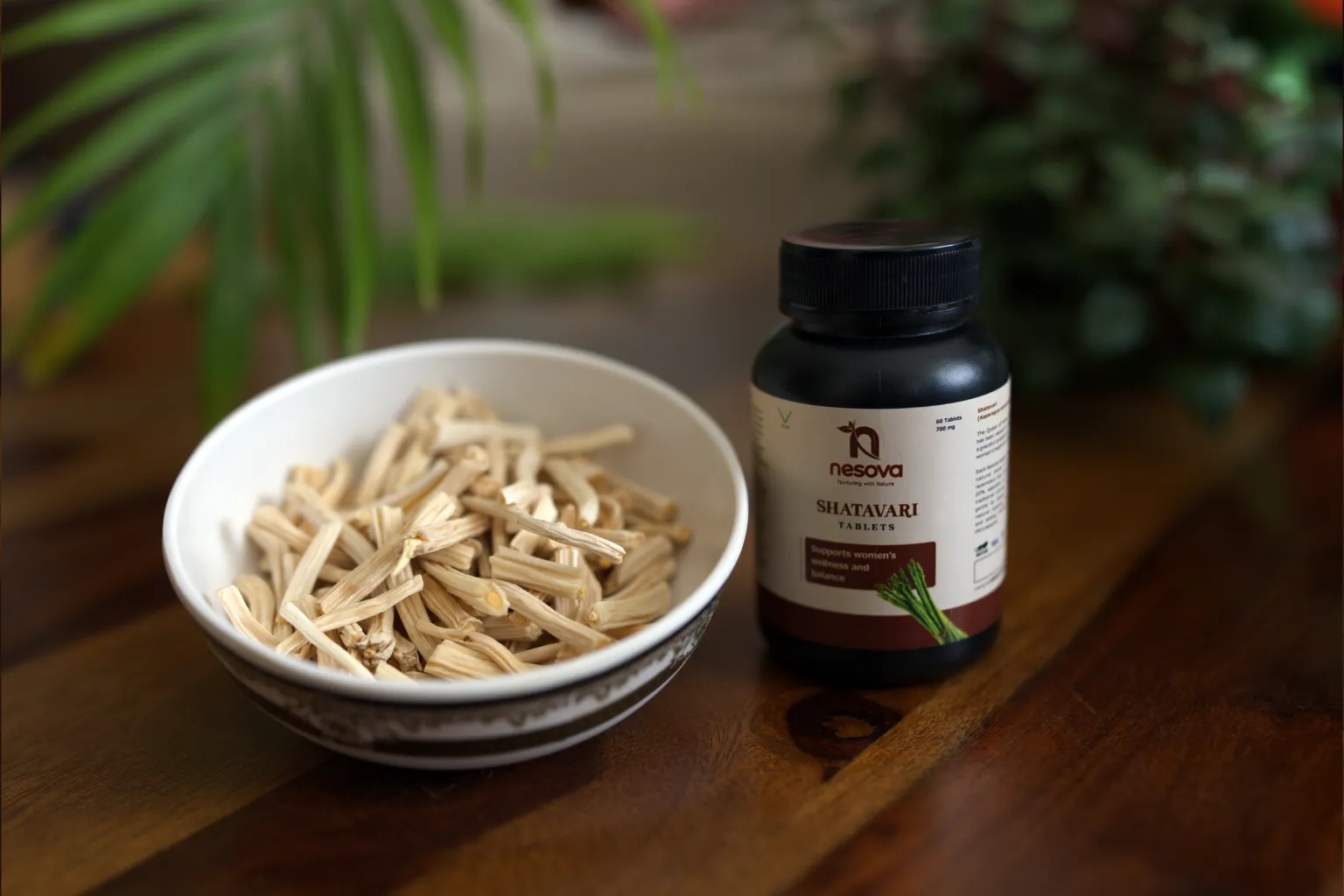
Shatavari (Asparagus racemosus) has long been considered one of Ayurveda’s most important herbs for women’s health. Its name loosely translates to ‘she who possesses a hundred husbands’, an ancient metaphor for the strength and vitality it supports.
What It Supports
- Hormonal balance across different life stages, including monthly cycles and perimenopause
- Energy and vitality without stimulation or overstimulation
- The female reproductive system, used traditionally for centuries
- Emotional steadiness and resilience during hormonally demanding periods
Shatavari is not limited to women, but its primary traditional application is in supporting feminine physiology. It is gentle, cumulative in its effect, and deeply rooted in classical Ayurvedic formulation tradition.
Using Both Together
Ashwagandha and Shatavari are sometimes used in combination because they address complementary aspects of wellness. While Ashwagandha focuses more on stress modulation and energy regulation, Shatavari brings hormonal balance and deep nourishment.
For women managing the demands of professional life alongside hormonal health, this pairing can be particularly relevant.
Consistency Is the Key
With adaptogens, the benefits are rarely immediate. They build gradually, like a quiet calibration happening beneath the surface. Most people report noticing changes after two to four weeks of consistent daily use, though individual experience will vary.
Nesova’s Ashwagandha Capsules and Shatavari Tablets are formulated for regular, sustained use as part of a daily wellness ritual rather than reactive supplementation.
Are They Safe for Long-Term Use?
Both Ashwagandha and Shatavari have long histories of use in traditional medicine with well-established safety profiles. As with any supplement, it is advisable to consult a healthcare practitioner if you have existing health conditions or are pregnant.
Nesova formulations are clean, tested, and free from unnecessary additives, designed to support long-term wellbeing without adding unnecessary burden to the body.
Stress is not going away. But how your body responds to it can change. Ashwagandha and Shatavari are two of the oldest tools available for that shift. Nesova brings them to your daily routine in a form that respects the tradition behind them.